PART 4
Here is the rewritten version of Part 4 (The End) in English, preserving all the original dialogue verbatim while refreshing the narrative phrasing and descriptive depth:
Alessandro Romano had spent seven long years hunting ghosts outside himself, only to discover that the shadow his wife feared had once carried his own name.
He did not open Elena’s letter immediately. For perhaps the first time in his life, Alessandro was afraid of words.
Luca stood only a few feet away—his son, alive, seven years old, watching him.
Alessandro finally turned to Marco. “Explain.”
“Elena never believed you would hurt her,” Marco spoke carefully. “She never believed you would hurt Luca.”
“Then why run?”
“Because she believed you loved the Romano empire more than you understood.”
Alessandro’s jaw tightened.
Marco continued. “Every threat made you increase security. Every attack made you strike harder. Every enemy created two more enemies.”
“You think I didn’t know that?”
“Elena knew you knew.” Marco’s gaze hardened. “That was what frightened her.”
Alessandro flinched.
“She asked you to leave. You said you couldn’t. She asked whether you would want your son inheriting your life.” Marco paused. “You told her he would inherit your name.”
A painful memory surfaced. Alessandro heard his own voice echoing from seven years ago—proud, certain, blind: A Romano does not hide from the world. He had genuinely believed he was promising his child strength. Elena had heard a life sentence.
Luca sat down beside Sophie. She handed him the worn toy rabbit. “For bravery.”
He looked confused. “Does it work?”
“Sometimes.”
Alessandro almost smiled. Almost.
Then he unsealed Elena’s letter. The very first line shattered his resolve:
My love, if you are reading this, then someone has finally decided the truth is safer than silence.
He read on. Elena wrote that she had loved him from the first night he abandoned an important dinner to rescue an injured dog in the rain, only to threaten everyone present never to mention it again.
Clara smiled faintly through her tears. That sounded just like him.
Then the tone of the letter shifted. Elena described watching Alessandro slowly disappear beneath the heavy burden of responsibility—his father’s expectations, the organization, the bloody retaliation, and the endless belief that survival required becoming harder.
I never feared the man you were with me, Alessandro. I feared the man the world required you to become every morning after leaving our bedroom.
Alessandro stopped reading. Luca quietly watched him.
He forced himself to continue:
If our child grows beside you while you remain trapped in that world, he will learn that love means possession, protection means control, and courage means never walking away. I need him to learn something different.
Alessandro lowered the page. The silence in the room was absolute.
The next paragraph was noticeably shakier, written shortly after Luca’s birth:
He has your hands.
Alessandro stared at his son’s fingers curled around Bunny.
When he sleeps, he frowns exactly as you do. I wish you could see him. God, how I wish you could see him.
His vision blurred with tears.
If I survive, I will come back when we can speak safely. If I do not, Marco has promised to keep him from the Romano world until you choose to leave it—or until he is old enough to choose for himself.
Alessandro’s eyes lifted to Marco. “That was the promise.”
“Yes.”
“You let me believe my son was dead because of a promise.”
“I watched Elena die making me swear it.” Marco’s voice broke. “I chose the promise.”
Alessandro wanted to hate him. Part of him did; perhaps part of him always would. But then Luca broke the silence.
“Did my mother love him?”
Everyone turned toward the young boy. Lucia answered softly, “Very much.”
Luca considered Alessandro thoughtfully. “Then I think she hoped he’d come.”
The quiet simplicity of his words rendered them all speechless. Clara looked away as fresh tears filled her eyes. That was the core truth beneath Elena’s letter: she had not vanished to punish Alessandro, nor had she hidden his child out of hatred. She had left a door open—she had simply refused to drag him through it against his will. He had to choose to walk through it himself.
Alessandro carefully folded the page. “What happened to Daniel?”
Marco’s expression darkened. “There was another reason Elena became frightened.” He reached inside his coat pocket and withdrew a thin folder. “Financial records.”
Clara frowned, confused. “What do they have to do with Daniel?”
“Daniel discovered someone had been authorizing payments using Alessandro’s signature.”
“Who?”
Marco gave a direct answer: “Vittorio.”
Alessandro’s face went dead cold. Vittorio Romano—his father’s younger brother, his godfather, the very man who had advised him after Elena’s death and stood beside the empty coffin.
“He was stealing from me?”
“More than money.” Marco opened the folder. “Vittorio arranged conflicts with rival groups, then convinced you retaliation was necessary. He kept the organization unstable because instability made him indispensable.”
Alessandro stared at the paper trail. “He manufactured enemies.”
“Yes.”
“And Elena found out.”
“Yes.”
Now every piece of the puzzle locked into place. Elena had not merely feared Alessandro’s lifestyle choices; she had uncovered that someone was actively manipulating him toward his worst impulses.
“Did Vittorio cause the crash?”
“No.” Marco shook his head. “Elena staged that herself.”
Alessandro frowned. “Then Daniel?”
Marco looked at Clara, his eyes heavy with sorrow. “Three years ago, Daniel contacted me. He said Vittorio had found evidence Luca existed.”
Clara stopped breathing altogether. “Daniel tried to move him.”
“Yes.”
“And the warehouse?”
“Vittorio’s men followed him.”
Clara closed her eyes, her knees buckling. Alessandro quickly reached out to catch her arm.
Marco continued rapidly, “Daniel got away long enough to send Luca elsewhere. The fire at the warehouse was meant to destroy documents.”
“My husband died there.”
“Yes.”
“Because of Vittorio.”
Marco’s heavy silence was the only answer she needed. Clara pressed a tight fist to her mouth. For three long years she had accepted a tragic accident because randomness was easier to bear than malice. Now her grief had a targeted name.
Sophie noticed her mother crying and ran over. “Mommy.”
Clara knelt and held her close. “I’m okay.”
“No.” The little girl reached out to touch her cheek. “You’re sad.”
Clara let out a laugh through her tears. “Yes.”
Sophie wrapped her arms tight around her. Across the room, Luca watched them, then awkwardly walked over to join. Clara opened one arm, inviting him into the embrace.
Alessandro watched the four of them reflected in the windowpane—a family formed not by blood alone, but bound by loss, promises, and tragic timing.
He locked eyes with Marco. “Vittorio believes Luca is dead?”
“He believes Daniel died before moving him.”
“Then he cannot know we’re here.”
Suddenly, the crunch of gravel echoed from outside. Marco’s face instantly changed. Lucia turned toward the window as a black sedan pulled up the narrow mountain path.
Marco whispered in horror, “I was wrong.”
Vittorio Romano stepped out of the vehicle. At sixty-three, he was elegant, silver-haired, and possessed a calm smile. He entered the cottage casually, as though arriving for Sunday lunch.
“Alessandro.”
Nobody offered a greeting. Vittorio’s eyes wandered over to Luca, and his smile vanished instantly—it lasted only a split second, but it was enough. Alessandro saw everything: recognition, sudden fear, and cold calculation.
Then the charming mask slipped back into place. “My God.” Vittorio placed a hand over his heart. “Is it possible?”
Alessandro stepped firmly between his uncle and the children. “You tell me.”
Vittorio looked deeply wounded. “After everything we have endured together, you greet me like an enemy?”
“You followed us.”
“I was concerned.”
“You were always concerned.” Alessandro closed the distance between them. “Concerned enough to create threats.”
Vittorio’s eyes flicked menacingly toward Marco. “Whatever he told you—”
“Daniel Bennett.”
Clara saw it—a tiny, instantaneous twitch in Vittorio’s expression. But he recovered instantly. “I don’t know the name.”
Sophie wriggled free from Clara’s grip, clutching her stuffed rabbit. “My daddy knew you.”
Clara froze in terror. “Sophie?”
The child pointed directly at the older man. “You’re the ring man.”
Vittorio stared down. “What?”
Sophie reached out to touch his hand. On his pinky finger rested a black signet ring carved with a silver serpent. “I saw it in Daddy’s box.”
Clara’s heart stopped. The photographs.
She rushed over to her bag. Before leaving the mansion, she had brought Daniel’s hidden envelope and several old photos. One picture showed Daniel standing beside a vehicle; at the edge of the frame was a man whose face had been cropped out, leaving only a visible hand wearing a black ring with a silver serpent. Vittorio’s ring.
Alessandro looked at the photo, then up at his uncle. “You met Daniel.”
Vittorio’s pleasant facade vanished entirely, revealing the ruthlessness beneath. “So what?”
Marco moved subtly toward the front door. Vittorio caught the movement. “Don’t.”
No one dared to move. Vittorio locked eyes with Alessandro. “You have spent your whole life benefiting from decisions men like me were willing to make.”
“Men like you?”
“Men who understood survival.”
“You killed Daniel.”
“I solved a problem.”
Clara flinched. Alessandro’s aura turned lethal with rage. Yet Luca was watching him. Sophie was watching him. And Elena’s letter remained gripped in his palm.
Seven years ago, Alessandro would have responded with immediate, bloody violence. He would have forced the room to remember his name. Instead, he did something Vittorio could never comprehend: he took a step backward.
Vittorio sneered contemptuously. “There he is.”
Alessandro looked straight at Marco. “Call them.”
Vittorio’s smugness evaporated. “Call whom?”
Marco pulled open the cottage door to reveal two government vehicles parked directly behind Vittorio’s sedan. Clara stared in shock.
Alessandro remained entirely composed. “Before we left the mansion, Marco sent copies of Daniel’s records to investigators.”
Vittorio let out a disbelieving laugh. “You?” He stared at Alessandro in absolute shock. “You would hand strangers our business?”
“No.” Alessandro looked softly at Luca. “I am handing them yours.”
Federal agents flooded into the cottage. Vittorio’s composure fractured completely. “You think this makes you clean?”
“No.” Alessandro’s answer was immediate. “I will answer for whatever belongs to me.”
Marco looked sharply at him, while Vittorio glared in disbelief. “You would destroy the Romano name?”
Alessandro looked at his son, then at Sophie, and finally at Clara. “No.” His voice carried a sudden, quiet peace. “I am ending what it used to mean.”
Vittorio was escorted away, shouting threats that Alessandro would regret this. Perhaps he would—some choices cost everything, even when they were right. But as the vehicles drove down the mountain road, Alessandro felt a sensation he hadn’t experienced in years. Not victory, but freedom.
Three months later, the wrought-iron gates of the Romano estate stood wide open. The armed perimeter guards were gone. Several of Alessandro’s business assets had been legally transitioned into legitimate enterprises, while others were undergoing thorough federal audits.
Lawyers came and went continuously. Alessandro fully cooperated and accepted consequences he once would have spent millions to avoid.
The eastern wing underwent the biggest change. Elena’s nursery was converted into Luca’s bedroom. The boy insisted that the unfinished tree remain just as it was.
“My mother started it,” he explained. “I don’t want somebody else pretending they did.”
Alessandro understood completely. Instead, they painted stars across the opposite wall. Sophie added a bright purple planet that didn’t exist in modern astronomy. Luca protested the inaccuracy, but Sophie simply informed him that he lacked imagination. They bickered like siblings before either realized that was precisely what they had become.
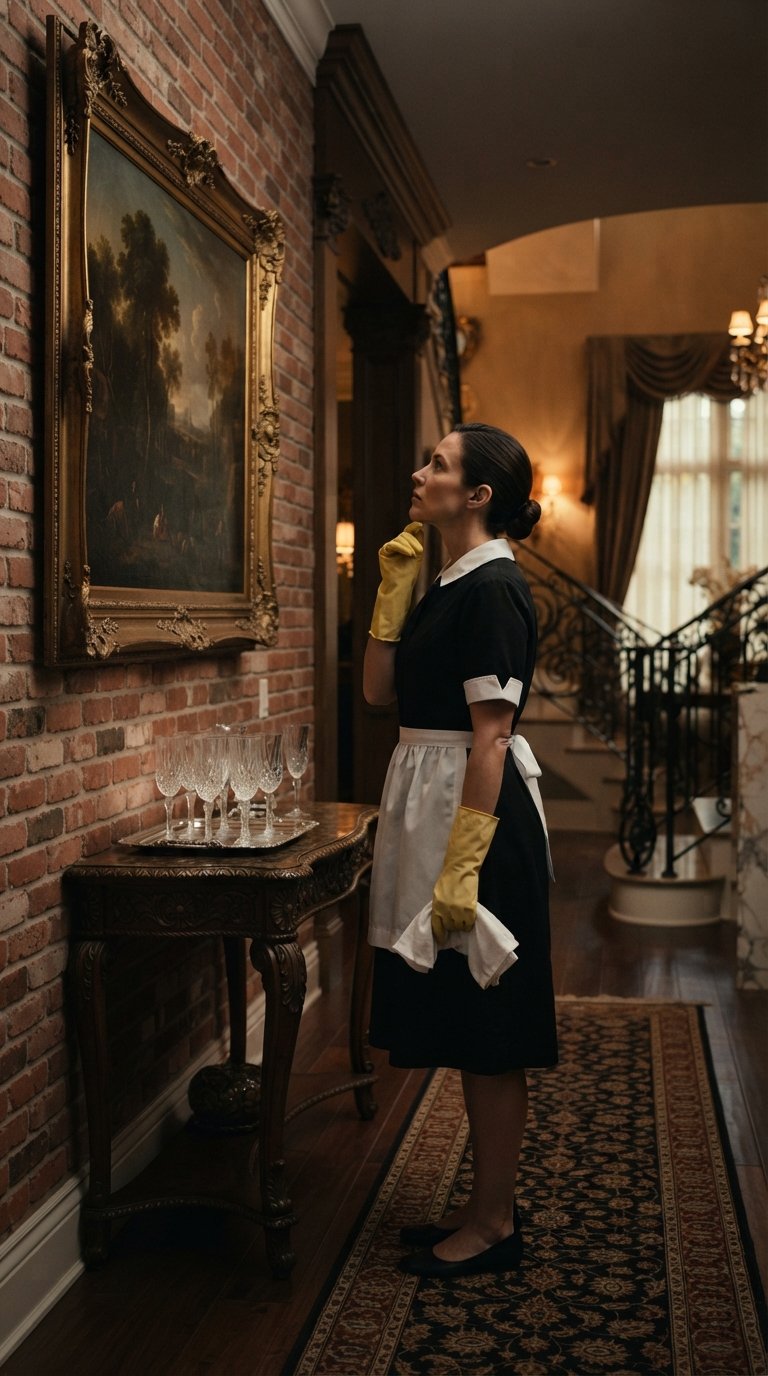
Clara remained at the mansion, but no longer as a maid. When Alessandro offered her full financial independence, she refused. When he offered her a house of her own, she declined that as well.
“I want to decide my own life.”
“You should.”
His supportive answer caught her by surprise. Eventually, she accepted a position directing a new charitable foundation funded by the sale of Alessandro’s former holdings. Its mission was simple: assist the families of individuals trying to leave organized crime and rebuild honest lives.
They named it the Elena Romano–Daniel Bennett Foundation.
Marco formally resigned, yet arrived at the breakfast table the very next morning anyway.
Alessandro stared at him. “You resigned.”
“I did.”
“Why are you here?”
“Luca invited me.”
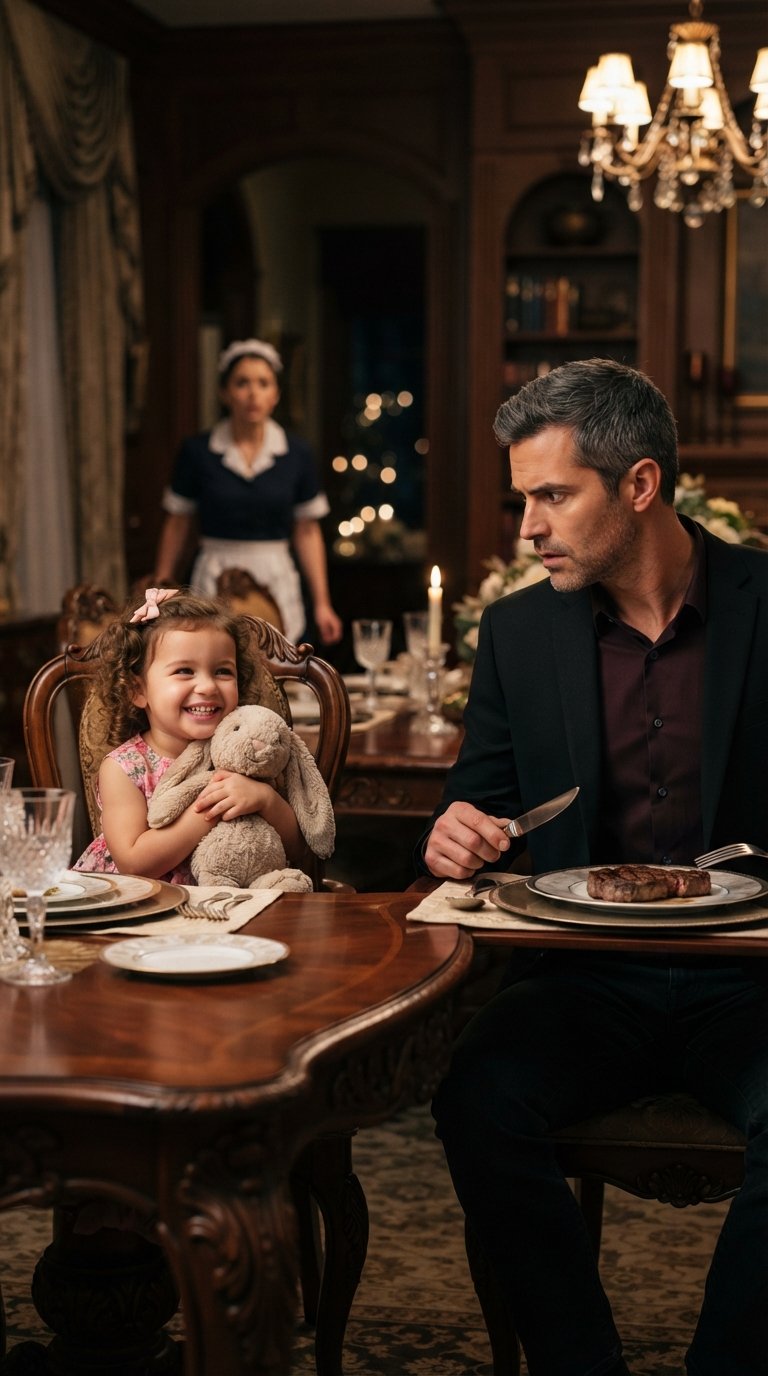
Luca kept eating his cereal without looking up. Marco took his seat, and Alessandro offered a playful glare. Sophie whispered loudly across the table, “He’s Uncle Tall,” and somehow that resolved the entire matter.
Forgiveness between Alessandro and Marco didn’t happen overnight—some scars required honest time rather than quick fixes. But Marco stayed. So did Luca. So did Clara. And Sophie naturally ran the massive estate as if she owned the entire property.
Nearly a year after the morning she had attempted to flee, Clara found Alessandro sitting on the outdoor terrace. Soft music drifted from inside, accompanied by the sound of children laughing near the gardens.
“You’re smiling,” she observed.
“Am I?”
“It’s becoming a bad habit.”
He turned to look at her. “I blame your daughter.”
“Most people do.”
Clara sat beside him. For a quiet moment, they watched the sunset over the estate. Their bond had evolved slowly—no dramatic declarations or passionate kisses in the rain. Just shared breakfasts, honest arguments, collective grief, Luca’s parent-teacher meetings, Sophie’s occasional nightmares, and long evenings talking about the loved ones they had lost. Trust built one ordinary day at a time.
Eventually, Alessandro spoke up. “Do you ever think about leaving?”
Clara glanced over. “The estate?”
“Me.”
There it was: the formidable Alessandro Romano, once feared by powerful men, asking a question with the absolute vulnerability of someone who had learned that true love could never be coerced.
Clara smiled gently. “Sometimes.”
His face fell slightly.
She laughed. “I also think about throwing you off balconies when you reorganize my desk.”
“I improved it.”
“You alphabetized my personal notes.”
“They were chaos.”
“They were mine.”
He opened his mouth to defend himself, then paused. “Point taken.”
Clara stared at him in mock astonishment. “That might be the most miraculous thing I’ve ever heard.”
He laughed—not the harsh, rusty sound Sophie had pulled from him a year ago, but a genuine, warm, easy laugh.
Heavy footsteps thundered from the hallway. Sophie marched out wearing a paper crown, followed by Luca, who bore the exhausted expression of an older brother resigned to his fate.
Sophie planted both hands on her hips. “I changed my mind.”
Alessandro looked genuinely concerned. “About what?”
“When I’m big, I’m not marrying you.”
Clara coughed to hide a laugh, while Luca rolled his eyes. “I told her that was weird.”
Sophie ignored him entirely. “I think Mommy should.”
Silence fell over the terrace. Clara turned bright red, while Alessandro stared in mild shock. Marco, standing inside the doorway, immediately backed away to avoid being drawn into the conversation.
“Sophie Bennett—” Clara began warningly.
But Alessandro was already smiling. “Interesting proposal.”
“Do not encourage her.”
“I’m considering the terms.”
“There are no terms.”
Sophie scrambled up into Alessandro’s lap. “Then we can all stay.” Her voice softened. “You and Mommy and me and Luca.”
The adults stopped teasing. Not because the suggestion was wrong, but because it was simple. Children possessed an innate ability to reduce complex adult problems down to the foundational questions everyone avoided asking: Can we stay?
Alessandro looked over at Luca. The boy gave a slight shrug. “I wouldn’t mind.”
Clara looked toward the warm lights of the mansion. Once, the estate had felt like a cold fortress designed to keep danger out. Now, its doors were open, lights glowed through the windows, laughter echoed from the kitchen, muddy shoes lined the entryway, crayons sat on Alessandro’s expensive mahogany desk, and an unfinished tree adorned a bedroom wall. Evidence of real life was everywhere.
Clara reached out and took Alessandro’s hand. Not forever, not yet—but for tonight. That was more than enough.
Six months later, they were married in a quiet ceremony beneath the ancient oak tree behind the mansion. Luca stood proudly as Alessandro’s best man. Sophie scattered almost no flower petals because she got distracted halfway down the aisle chasing a butterfly. Marco shed tears and vehemently denied it.
Clara wore Daniel’s original wedding band on a gold chain tucked beneath her dress, and Alessandro carried Elena’s final letter inside his suit jacket. No one was replacing anyone, and that mattered deeply. Love had not erased their grief; it had simply taught grief how to coexist in a home where joy had returned.
At the reception, Sophie climbed onto a chair and demanded everyone’s attention. “I have something important!”
The room quieted down. She pointed dramatically at Alessandro. “I told you somebody was going to marry you!”
The entire room erupted into laughter. Alessandro buried his face in his hands, Clara kissed his cheek, and Luca laughed harder than anyone else.
Later that evening, after the children were asleep, Clara returned to Luca’s room to retrieve Sophie’s forgotten rabbit. Bunny was resting right beneath the painted tree. One of its felt ears had split open once again.
“Of course,” Clara murmured affectionately.
She carried the plush toy into Alessandro’s study. “You’re repairing this.”
He put on an offended face. “I repaired it last time.”
“Poorly.”
He pulled open the sewing kit. Clara watched him carefully cut away several loose threads. Suddenly, his fingers stopped.
“There’s something else inside.”
Clara frowned. “That rabbit cannot possibly contain another secret.”
Alessandro reached beneath the plush filling and drew out a tiny folded envelope that neither of them had noticed before. No key, no ledger, no evidence—just a small piece of paper. On the outside, written in faded cursive, were six words:
FOR LUCA, WHEN HE ASKS ABOUT ME.
Alessandro stared in absolute disbelief. “Elena.”
Clara sat beside him. They went to wake Luca. The boy came downstairs half-asleep, his hair messy. When Alessandro handed him the letter, Luca’s eyes widened instantly.
“My mother wrote this?”
“Yes.”
“Have you read it?”
“No.”
Luca turned the small envelope over in his hands. For a brief second, he seemed hesitant to open it. Then Sophie shuffled into the room, dragging her favorite blanket.
“What’s everybody doing?”
Luca smiled softly at her. “My mother left me a story.”
Sophie climbed onto the couch beside him. “Is it a good one?”
Luca looked up at Alessandro, then at Clara, at Bunny resting on the table, and at the family that had been forged out of secrets once meant to tear them apart.
Then he gently broke the paper seal.
“I guess we’re about to find out.”
Outside, dawn began to brighten the windows of the Romano estate. Seven years ago, that house had been suffocated by silence. Now, four people leaned in close as a boy unfolded a letter from his mother—while somewhere behind them, Alessandro Romano began to laugh.