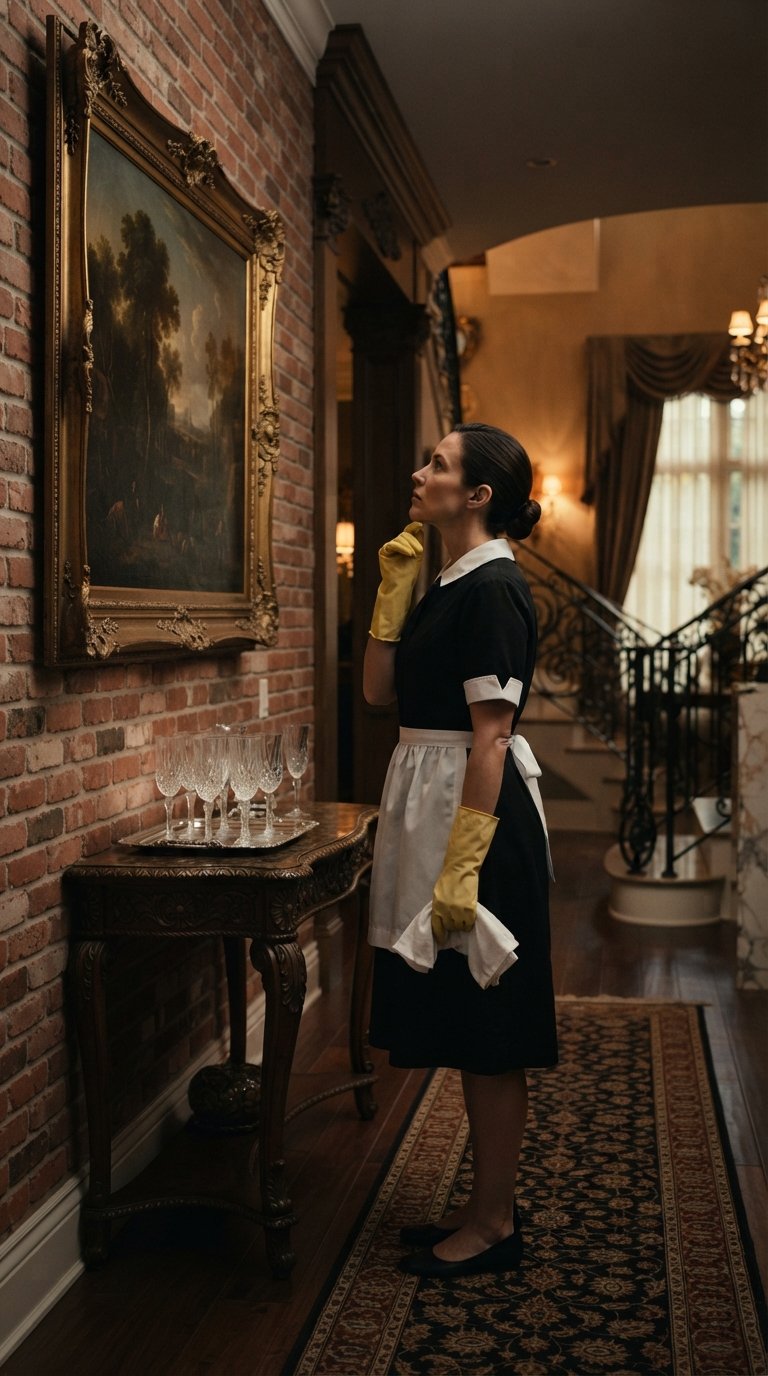

Here is Part 3 translated into expressive English prose, keeping all of your original dialogue exactly as written:
PART 3 — WHAT PHILIPPE HAD BECOME
The review lasted seven weeks. It was not dramatic—no leaked scandal, no journalists, no public resignations. That was intentional; Henri believed humiliation rarely improved people. Truth sometimes did.
The results were complicated. Ardentis was not a cruel company: most employees liked their teams, compensation was strong, training was excellent, technical standards were high, and many managers were respected. But beneath that, a pattern emerged: fear increased with hierarchy.
Junior employees avoided disagreeing with certain senior leaders. Assistants reported taking blame for decisions they had not made. Support teams described being invisible until something went wrong. Maintenance employees were expected to stay unseen around important visitors. Security staff faced irritation from executives asked to follow access procedures. Interns learned quickly which directors could end their future with a casual comment.
Philippe’s name appeared often, though not always negatively, which surprised Claire. He had protected teams during layoffs, he had once personally arranged emergency housing for an employee after a fire, he paid attention to details others missed, and he worked harder than almost anyone. He was not heartless; he was dangerous in another way. He believed performance justified fear.
Henri read every report, then asked Philippe to meet him away from headquarters at a small café near the Seine—no boardroom, no assistants. Philippe arrived late, and Henri said immediately:
“Seven minutes.”
Philippe raised an eyebrow. “You’re timing me?”
“No. I’m old. Seven minutes feels expensive.”
Philippe almost smiled. They sat, and Henri ordered coffee. Philippe asked:
“Am I being fired?”
“Do you want to be?”
“No.”
“Then stop asking as if you do.”
Philippe sighed. “I’ve read the review.”
“And?”
“I don’t agree with all of it.”
“Good.”
Philippe looked surprised as Henri continued, “If you agreed with every criticism instantly, I’d suspect performance.”
Philippe looked down. “Some of it is fair.”
Henri waited, so Philippe continued: “I’m demanding.”
“Yes.”
“I don’t tolerate excuses.”
“Sometimes.”
“I expect people to be prepared.”
“Reasonable.”
Philippe looked up. “You’re making this difficult.”
Henri smiled. “Reality usually is.”
Philippe leaned back. “People are too sensitive now.”
Henri’s expression changed—there it was, the defense. He asked:
“Were you sensitive when you were young?”
Philippe frowned. “What does that mean?”
“What did your father do?”
Philippe froze. “Why?”
“Answer.”
“Warehouse worker.”
“Your mother?”
“Cleaner.”
Henri nodded, and Philippe looked at him. “You already know this.”
“I want you to say it.”
Philippe was irritated. “My mother cleaned offices.”
Henri remained silent. Philippe continued: “She worked nights.”
Henri looked at him. “So did mine.”
Philippe’s expression softened slightly. Henri asked quietly:
“Did you ever go with her?”
Philippe nodded. “When I was small.”
“Did people respect her?”
Philippe looked away. “No.”
Henri waited until Philippe’s jaw tightened. “She hated when people left cups everywhere after meetings.”
Henri almost smiled. “What did she say?”
“That rich people thought tables cleaned themselves.”
The irony landed. Philippe closed his eyes, while Henri said nothing. Philippe whispered:
“I know.”
“Do you?”
“Yes.”
Henri leaned back as Philippe stared at the coffee.
“When I started working in corporate offices, I promised myself nobody would ever look at me like that.” Henri waited. “I changed my accent.”
“Why?”
“Because people noticed.”
“My clothes.”
“Why?”
“Same reason.”
“I stopped talking about my parents.”
Henri said quietly: “And eventually you started judging people who reminded you of where you came from.”
Philippe looked at him. “I hate that sentence.”
“I know.”
“Because it’s true.”
Henri nodded, and Philippe rubbed his face. “What do I do with that?”
“Work.”
Philippe laughed weakly. “That’s your answer to everything.”
“It worked for me.”
“What kind of work?”
Henri explained: Philippe would lose his place in the CEO succession process immediately, and his executive title would be suspended for six months. He would remain employed, but he would spend those months rotating through operational teams—facilities, reception, security, employee support, and technical service. Not as a ceremonial exercise, but real shifts without direct reports or a special office, followed by employee evaluations afterward.
Philippe stared. “You want me to clean floors?”
Henri’s expression hardened. “No.” Philippe stopped, and Henri continued: “I want you to understand why you still hear ‘clean floors’ and think ‘punishment.’”
Silence filled the space. Philippe looked ashamed. Henri added:
“If you do clean floors, do it correctly. People walk on them.”
Philippe laughed despite himself, then became serious. “What happens after six months?”
Henri replied: “We see who you are.”
Philippe asked: “And Claire?”
“What about her?”
“You’re mentoring her now?”
“No.”
“She spends time with you.”
“She asks questions.”
Philippe smiled bitterly. “That sounds like mentoring.”
Henri shrugged. “Then perhaps.”
“Are you preparing her for leadership?”
Henri laughed. “She’s twenty-one.”
“That doesn’t answer.”
Henri looked at him. “I’m preparing her to keep thinking.”
“Same thing?”
“Hopefully not.”
Philippe accepted the reassignment. The first weeks were brutal—not physically, but psychologically. He had spent two decades being recognized, and now people were unsure how to treat him: some were cold, some overly polite, and some secretly enjoyed his fall. Henri told management not to protect him from discomfort, but also not to humiliate him: “This is not revenge.”
Philippe worked with maintenance and learned how executive events created three times the cleaning load. He worked reception and saw how some directors treated front-desk staff. He spent shifts with security, where one executive became irritated when asked to display identification. Philippe watched as the man said:
“Do you know who I am?”
The security officer stayed calm, but Philippe felt physically uncomfortable; he had used the same sentence years before. Not often, but enough. Later, he told Henri.
Henri asked: “What did you do?”
“I told the executive the officer was following policy.”
Henri nodded. “That all?”
“I apologized to the officer afterward.”
“Better.”
“Still not enough?”
Henri smiled. “You’re obsessed with passing.” Philippe frowned, and Henri continued: “Stop treating character like an exam.” That stayed with him.
Claire, meanwhile, continued her internship. For several weeks, people treated her differently—some congratulated her, some called her brave. She hated it, and Henri did too. One day she complained:
“People keep saying I defended the founder.”
Henri replied: “You didn’t.”
“I know.”
“You defended a janitor.”
“I know.”
“Keep correcting them.”
Claire did. Her work also got harder because Henri refused to protect her from criticism. Her first strategy presentation after the incident went badly when she misread a client-retention trend and a director dismantled her argument in five minutes. Claire left embarrassed, but Henri found her later.
“You’re upset.”
“I looked stupid.”
“Were you wrong?”
“Yes.”
“Excellent.”
Claire glared at him, but he smiled. “You learned something.”
“That’s easy to say when you’re not twenty-one.”
Henri laughed. “I was twenty-one once.”
“I doubt it.”
“Cruel.”
Claire smiled, and Henri became serious: “Don’t let one correct moral instinct convince you you’re generally correct.”
Claire stopped smiling. “That happens?”
“Constantly.” She remembered.
At the end of six months, Philippe received anonymous evaluations. Some were difficult:
- “He listens more, but still interrupts.”
- “He apologizes now.”
- “He stopped using titles to get special access.”
- “He knows my name.”
- “He helped when my shift ran late.”
The final comment came from Amadou, a maintenance technician who had worked at Ardentis for fourteen years. It read:
“I would not have wanted Philippe as my manager six months ago. Today I would accept it, but only if he keeps remembering that people below him can see things he cannot.”
Philippe read it three times. Henri asked: “Well?”
Philippe looked at him. “I spent twenty years trying to become the kind of man no one could ignore.” Henri waited. “And I became someone who ignored people.”
Henri nodded. Philippe continued: “I don’t know how I didn’t see it.”
Henri answered: “Power reduces mirrors.”
Philippe smiled sadly. “Another Henri sentence?”
“No. I just made that one up.”
Philippe laughed. He did not return to his old executive role; instead, he accepted a new position overseeing organizational operations and employee experience—lower profile, less prestige, but more direct contact with staff. He accepted without negotiating, which mattered.
Claire finished her internship three months later and received a full-time offer in strategy. Not from Henri—he deliberately abstained from the decision. Claire confronted him:
“You could have voted.”
“I did.”
“You abstained.”
“That was my vote.”
“Why?”
“Because if you need me to get hired, we failed.”
Claire stared, then smiled. “That’s annoyingly reasonable.”
“I work hard at it.”
Years passed. Philippe became one of the most respected internal leaders in the company. He told new managers his own story—not Henri’s, but his:
“I once threatened an intern for defending a janitor.”
He never began by revealing who Henri was; he always waited, then said:
“If your behavior becomes embarrassing only after you discover the person has power, the problem is not embarrassment.”
Claire kept that line too. At thirty-two, she became a department director; at thirty-eight, she joined senior strategy. By then, Henri had largely retired, but he still called—usually at inconvenient times.
“Are you listening to junior people?”
“Yes.”
“You answered too fast.”
Claire laughed, so he asked again: “Are you?”
She slowed down. “Not enough.”
“Better.”
One evening, Claire visited him at his small home outside Paris. Henri was eighty-three, and his health had begun to weaken. They sat near a window, and she asked:
“Do you regret what you did?”
“The janitor experiment?”
“Yes.”
Henri thought. “Parts of it.”
“Which parts?”
“I made people into subjects without asking.”
Claire nodded. “And?”
“I made power the twist.”
She understood as Henri continued: “People love the story because the janitor turned out to be important.”
Claire said: “But the lesson is that it shouldn’t matter.”
Henri smiled. “Exactly.”
“Then why tell it?”
“To people like you.”
“Why me?”
“Because you understood before the reveal.”
Claire looked away, and Henri added: “And because you were afraid and still spoke.”
She smiled. “That sentence changed my life.”
“Which?”
“‘He isn’t bothering anyone.’”
Henri laughed. “Not very poetic.”
“It didn’t need to be.”
“No.”
Then he told her something she had never known: the empty chair had not only been symbolic. Henri had planned to give up his final voting rights that night; the board was choosing the future CEO, and he had come upstairs intending to cast his last succession vote and retire permanently. After seeing Philippe, he delayed the process. The eventual CEO selected months later was Isabelle’s deputy, a quieter candidate named Marc Delon.
Claire asked: “Did Philippe ever resent you?”
“Yes.”
“For how long?”
“Years.”
“And now?”
Henri smiled. “Ask him.”
She did, and Philippe’s answer surprised her:
“I resented him until I realized losing that promotion probably saved my life.”
“What do you mean?”
“I would have become more powerful without becoming better.” Claire understood as Philippe continued, “That’s a dangerous combination.”