PART 4 — WHEN THE CHAIR WAS EMPTY AGAIN
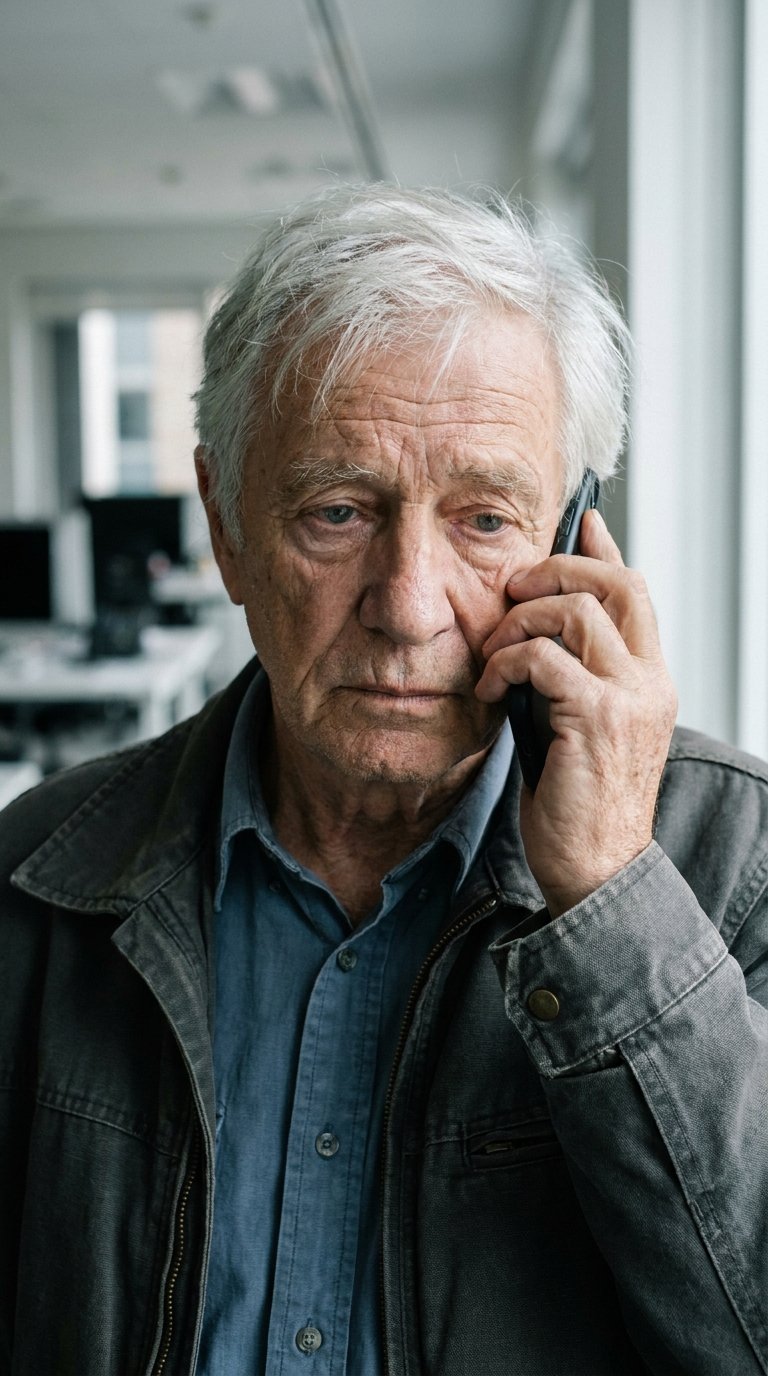
Henri Laurent died at eighty-five.
Quietly. At home. Early spring. His daughter was with him. His old black smartphone sat on the bedside table. No dramatic final call. No last board meeting. No great declaration. Just a long life ending after a short illness.
Claire received the news at six-thirty in the morning. She was forty-one, senior vice president of corporate strategy. She sat on the edge of her bed for several minutes without moving, then called Philippe.
He answered on the first ring.
“You know?”
“Yes.”
Silence.
Philippe was sixty-nine, retired for nearly three years. His voice broke. “I thought I had more time.”
Claire closed her eyes. “We always do.”
The board wanted a major memorial. Henri had anticipated this and left instructions: no giant portrait, no naming the building after him, no statue, no dramatic video. One line in his note read:
“If anyone commissions a bronze version of me, melt it down and buy chairs for a school.”
Claire laughed when she read it, then cried harder.
The memorial took place on the top floor in the boardroom—the same room. The glass wall still overlooked the executive corridor. The table had been replaced years earlier, but the chair at the head remained: Henri’s chair.
For the memorial, it was left empty. This time deliberately—not to show status, but to show absence.
Employees from every level attended in rotating groups: engineers, assistants, security, maintenance, reception, interns, former executives.
Philippe stood near the glass. Claire joined him. He looked older, softer.
“That corridor,” he said.
Claire followed his gaze. “I remember.”
“I can still hear myself.”
“So can I.”
Philippe smiled sadly. “I was awful.”
Claire shook her head. “You did something awful.”
He looked at her. “Difference?”
“A big one.”
Philippe smiled. “That sounds like Henri.”
“I stole it.”
“Good.”
They stood quietly. Philippe then asked: “Did he ever tell you I almost quit during the six-month rotation?”
“No.”
“Three times.”
“What stopped you?”
Philippe looked at the empty chair. “The first time, pride. The second, anger.”
“And the third?”
He smiled. “Amadou.”
“The maintenance technician?”
“Yes.”
“What did he say?”
Philippe remembered. “I told him I couldn’t do it anymore.”
Claire waited.
“He said, ‘Monsieur Dubois, you survived twenty years upstairs. You can survive six months with us.’”
Claire laughed. “So you stayed.”
“Yes.” Philippe looked at her. “That man taught me more about leadership than half the executives I ever worked with.”
Claire nodded.
The memorial ended without speeches from politicians or celebrities. Claire gave a short address, standing beside the empty chair.
“When I was twenty-one, I believed courage meant not being afraid,” she paused. “Henri taught me that courage usually arrives while fear is already in the room.”
She looked through the glass corridor.
“He also taught me that one good moment does not make someone good forever, and one bad moment does not make someone bad forever.”
Philippe lowered his head.
Claire continued: “What matters is what we choose after we see ourselves clearly.”
Then she looked at the empty chair.
“Henri spent years reminding us that the chair never made the leader. The person in it only borrowed responsibility for a while.”
That was all.
After Henri’s death, Ardentis created no museum and no monument. Instead, the board changed one tradition: every year, one seat in a board meeting was assigned to a randomly selected employee from outside management—maintenance, security, reception, junior engineering, customer service, anyone. Not symbolic; they received materials in advance, they could ask questions, and they could disagree.
The chair was called simply: The Open Seat.
Claire supported the idea. Philippe loved it. Henri would probably have complained that naming it made it too dramatic. They did it anyway.
Years passed. Claire eventually became CEO. She was forty-eight when the board selected her. She almost refused.
Philippe called. “You’re terrified?”
“Yes.”
“Good.”
She laughed. “Henri used to say that.”
“I know.”
“Do you think I’m ready?”
Philippe said: “No.”
Claire went silent.
He continued: “And anyone who thinks they’re completely ready for that job probably shouldn’t have it.”
Claire smiled. “Also Henri?”
“No. That one is mine.”
On Claire’s first day as CEO, she entered the top-floor boardroom early. The room was empty. She stood behind the chair at the head of the table—Henri’s chair.
She did not sit. Not yet.
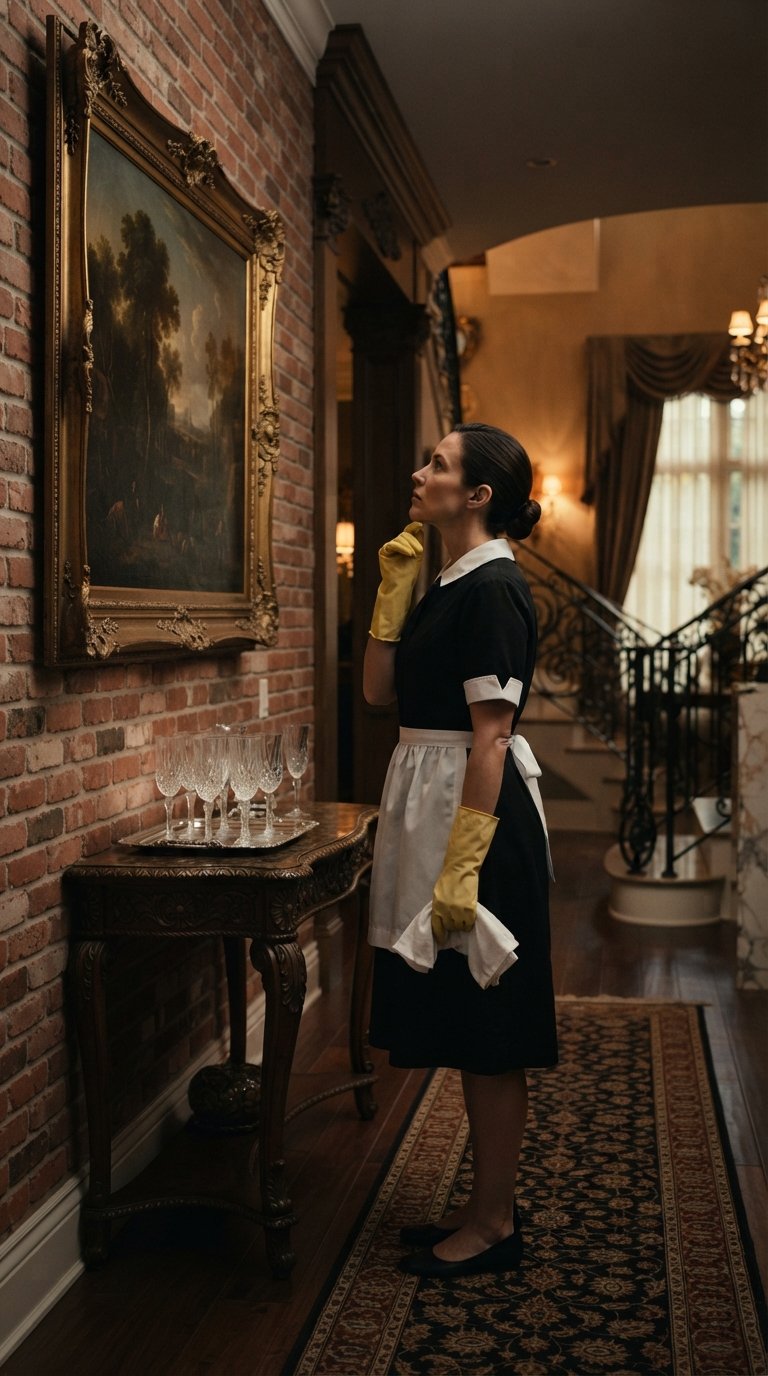
Instead, she walked outside into the corridor. A maintenance worker was polishing the floor. Young man, maybe twenty-three. He looked up.
“Sorry, madame, I can finish later.”
Claire shook her head. “No. You’re fine.” She looked at his badge. “Thomas?”
“Yes.”
“I’m Claire.”
He smiled nervously. “I know.”
She laughed. “Right.” Then she asked: “How long have you worked here?”
“Four months.”
“You like it?”
He hesitated. Claire noticed. “Real answer.”
Thomas smiled. “Mostly.”
“What don’t you like?”
He looked toward the boardroom, then back at her. “You really want to know?”
“Yes.”
“People from this floor sometimes leave cups everywhere.”
Claire froze, then laughed so hard that Thomas looked confused.
“What?”
“Nothing.” She wiped at her eyes. “You have no idea how perfect that answer is.”
Thomas smiled awkwardly. Claire looked through the glass—the chair waited. Then she turned back.
“If someone ever tells you that people on this floor are too important to clean up after themselves, tell me.”
Thomas laughed. “You serious?”
“Very.”
She returned to the boardroom. The executives began arriving. One chair beside the end of the table remained open: The Open Seat.
That day it belonged to Amélie, a twenty-six-year-old cybersecurity support analyst.
Claire sat at the head. The meeting began. Halfway through, a senior executive proposed a restructuring: excellent numbers, strong projected savings.
Claire asked: “What happens to the support teams?”
The executive replied: “We can manage the transition.”
Amélie raised her hand. The room paused—old Ardentis habits still existed; junior people did not interrupt executives naturally.
Claire looked at her. “Please.”
Amélie spoke. “The staffing assumption is wrong.”
The executive frowned. “How?”
She explained: the model assumed automated support could absorb forty percent of internal tickets. In reality, the software pilot had reached only seventeen percent without human intervention. The projected savings were based on an assumption that would likely overload support teams.
The room became quiet. Claire looked at the executive. “Is she right?”
He hesitated. “I’d need to verify.”
Claire nodded. “Then we don’t approve today.”
No anger. No embarrassment. No threat. Just delay.
After the meeting, Amélie approached. “I’m sorry if I overstepped.”
Claire looked at her. “You prevented us from making a bad decision.”
Amélie smiled nervously. “I thought I might get in trouble.”
Claire’s expression changed. After all these years, it was still there—the fear.
Claire said: “Then we still have work to do.”
That evening, she called Philippe.
“You know what happened?”
“What?”
She told him. Philippe laughed. “Henri wins again.”
Claire smiled. “No.”
“What?”
“We do.”
Years later, Ardentis became larger than Henri had ever imagined: new businesses, new countries, new technologies. Claire eventually retired.
On her final evening, she walked through the top floor alone. She stopped outside the glass boardroom. Inside, the chairs were empty—all of them.
She thought about Henri cleaning that corridor, Philippe’s threat, her fear, the phone, the line that had frozen everyone: “Why is my chair empty?”
For years, Claire believed that was the great reveal. It was not. The real question came later: What is the chair for?
Henri had spent his life learning the answer: a chair at the head of a table was not proof that someone mattered more. It was a place from which someone carried more responsibility for everyone else.
Claire entered the boardroom, placed her hand on the chair, then left. She did not take anything—no souvenir, no plaque, no phone, no piece of history.
In the corridor, a young intern waited near the elevator. He recognized her.
“Madame Moreau?”
“Yes?”
“Is it really your last day?”
“Yes.”
He looked disappointed. Claire smiled. “You’ll survive.”
He laughed, then hesitated. “Can I ask you something?”
“Of course.”
“Is the story about Henri Laurent true?”
Claire knew exactly which story. “Mostly.”
“He was really working as a janitor?”
“Yes.”
“And Philippe threatened you?”
“Yes.”
“And then Henri called the board and asked why his chair was empty?”
Claire smiled. “Exactly.”
The intern looked toward the glass room. “What did you think when everyone turned around?”
Claire considered. “I thought Henri must be incredibly important.”
“And now?”
She looked at the young man. “Now I think that was the least important thing about him.”
He frowned. “What was the most important?”
Claire looked down the corridor. A maintenance cart stood near the far wall. Someone had left a coffee cup on a table. An executive passing by picked it up and carried it toward the bin. Nobody noticed.
Claire smiled. “He wanted people to behave well before they knew who was watching.”
The intern thought about that, then asked: “Did it work?”
Claire looked through the glass at the empty chair. “Not perfectly.” A pause. “But better.”
She stepped into the elevator. The doors began to close. Then the intern called:
“Madame Moreau?”
Claire stopped the doors. “Yes?”
“Who sits in Henri’s chair now?”
Claire smiled. “No one owns it.”
The doors closed.
Years later, the chair was still there. CEOs came, CEOs left, board members changed, companies merged, technologies became obsolete. But one tradition survived.
Whenever a new chief executive sat at the head of that table for the first time, someone told them the story—not the story of the mysterious janitor who turned out to be powerful. That was the entertaining part, the easier part.
They told the harder story:
- About an intern who spoke before knowing who Henri was.
- About a manager who had to face what power had made him.
- About a founder who accepted that the company’s failures were partly his own.
- About an organization that chose correction over humiliation.
And about a chair. A chair that looked like a symbol of authority, but was really a reminder: the higher the seat, the greater the obligation to notice the people standing outside the glass.
Because anyone can respect a person after discovering they own the chair. Character is what happens before the reveal—before the title, before the phone call, before every executive turns around.
And that was why, decades after Henri Laurent was gone, the chair at the head of the table was never truly empty. It carried a question.