PART 2
Arthur called exactly one week later.
At 7:42 on Saturday morning.
I recognized his voice before he introduced himself.
“I’ve run into a serious problem.”
“What happened?”
“I’ve discovered that my refrigerator is completely empty.”
I laughed.
“That’s a terrible tragedy.”
“It is.”
“I suppose this means you need groceries.”
“I suppose it does.”
“And let me guess…”
“You’re already going to the store anyway.”
That was the first Saturday.
Neither of us realized there would be hundreds more.
At first, our arrangement was simple.
Arthur handed me a short shopping list.
Milk.
Bread.
Coffee.
Soup.
Sometimes apples.
Sometimes bacon.
Never anything expensive.
Whenever I brought the bags inside, he’d insist on paying for the groceries plus a little extra for gas.
Every week I refused.
Every week he argued.
Every week he lost.
By spring, another routine had quietly formed.
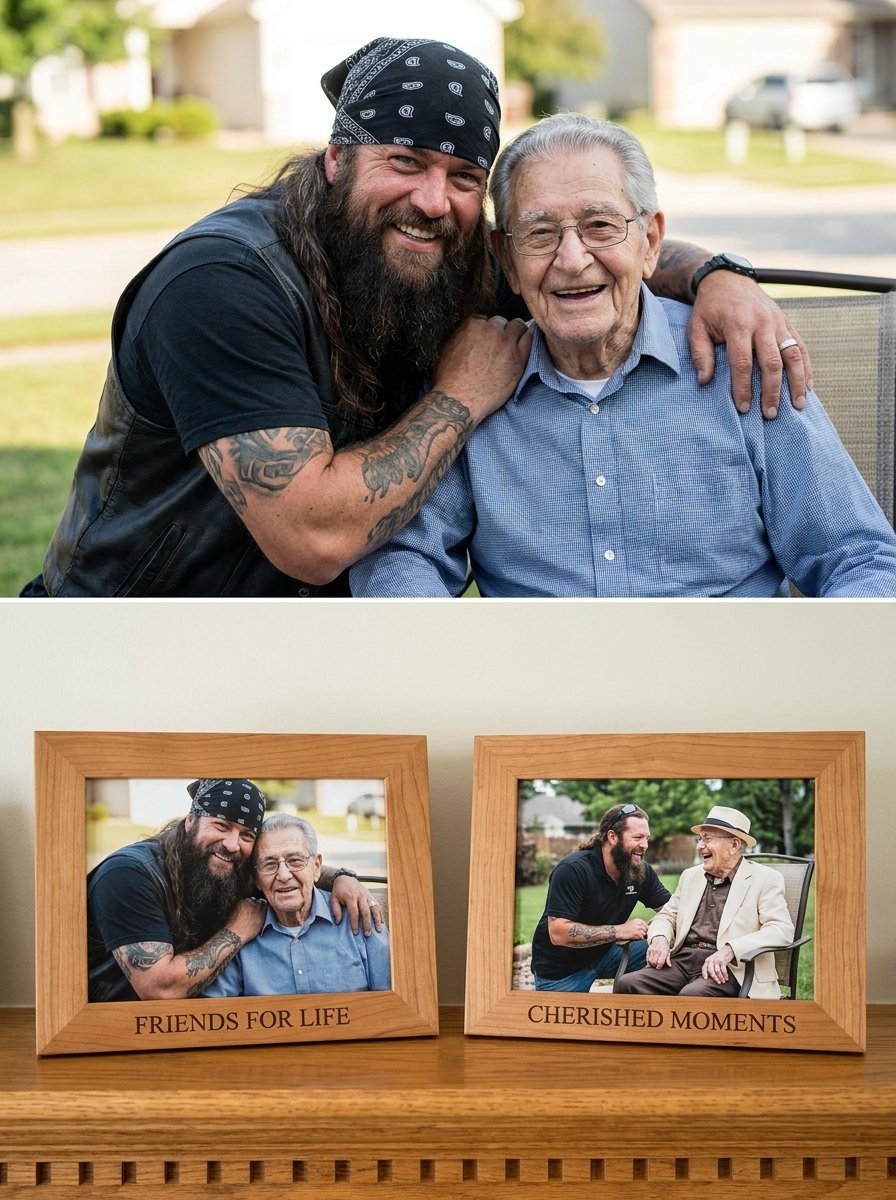
Instead of leaving immediately after putting everything away, I’d stay for breakfast.
Arthur wasn’t much of a cook.
His scrambled eggs were usually overdone.
His toast always came out either burnt or pale enough to resemble warm bread.
His coffee…
Well, his coffee deserved every insult I gave it.
“You’ve made this with engine oil again.”
“It’s called strong coffee.”
“It’s called a lawsuit waiting to happen.”
He would laugh so hard the spoon rattled against his mug.
Those breakfasts lasted longer than the shopping trips.
Sometimes an hour.
Sometimes two.
We talked about everything.
He told stories about working on freight trains that crossed the Midwest during snowstorms.
About proposing to his wife, Margaret, with a ring he could barely afford.
About buying the little white house on Willow Lane when interest rates were high and everyone thought he was making a mistake.
In return, I told him about rewiring old homes, impossible customers, and the loneliness that followed my divorce.
One rainy Saturday he looked across the table and asked,
“Do you know why you’re still hurting?”
I shrugged.
“Because I failed.”
He shook his head.
“No.”
“You don’t even know what happened.”
“I don’t need to.”
He pointed at me with his fork.
“You keep talking about your marriage as if losing it proved something about your worth.”
I looked away.
Arthur smiled gently.
“Bad endings don’t erase good people.”
No therapist had ever explained it so simply.
Months became years before either of us noticed.
The shopping lists grew a little longer.
Arthur’s steps grew a little slower.
His hands shook a little more every winter.
The old station wagon spent longer stretches sitting beneath its faded cover.
Eventually he admitted what both of us already knew.
“I shouldn’t be driving anymore.”
“I can take you wherever you need.”
“I hate depending on people.”
“I know.”
“It makes me feel old.”
“You are old.”
He threw a dinner roll at me.
“I liked you better five seconds ago.”
Three years after we met, someone new entered my life.
Her name was Emily.
We met because she hired my company to renovate the wiring in the bookstore she had inherited from her parents.
She was patient.
Funny.
And somehow capable of seeing through every wall I had built after my divorce.
When we married eighteen months later, she noticed something almost immediately.
Every Saturday morning, I disappeared.
The first weekend after our honeymoon she watched me loading grocery bags into my truck.
“Working today?”
“No.”
“Fishing?”
“No.”
She folded her arms.
“Then where are you going?”
“I’m taking groceries to Arthur.”
“The neighbor?”
“Yeah.”
“You’ve been doing that for…how long now?”
“Almost five years.”
Emily blinked.
“Five years?”
I nodded.
“He doesn’t have much family around.”
She smiled softly.
“Why didn’t you tell me it had become a tradition?”
“I guess I never thought about it.”
She picked up a container from the kitchen counter.
“Take him this.”
“What is it?”
“Chicken pot pie.”
“You made extra?”
“I had a feeling your friend wasn’t eating very well.”
Arthur finished nearly half the pie before admitting it was the best meal he’d eaten in months.
He looked at me across the table.
“You married above your station.”
“I’ve been told.”
The next Saturday Emily came with me.
Arthur pretended he didn’t enjoy the company.
By the following month he was setting an extra place at the table before we even arrived.
Two years later our son, Noah, was born.
Arthur held him before some of my own relatives did.
He cradled the tiny bundle with trembling hands and watery eyes.
“I haven’t held a baby in almost thirty years.”
Emily smiled.
“Looks like you still remember how.”
Arthur kissed Noah’s forehead.
“I never forgot.”
From then on, Noah knew him simply as Grandpa Art.
Arthur always protested.
“I’m not anybody’s grandfather.”
Noah ignored him completely.
Children have a wonderful habit of deciding these things for themselves.
There was only one subject Arthur almost never discussed.
His family.
Whenever I asked about them, his smile faded.
“I have a niece.”
“Rebecca?”
He nodded.
“Does she visit often?”
Arthur looked out the kitchen window before answering.
“When she needs something.”
Money.
A loan.
Help paying bills.
Advice she rarely followed.
She always promised she’d visit again soon.
She almost never did.
One Saturday I arrived earlier than usual.
Rebecca’s luxury SUV sat in the driveway.
The front door was open.
Raised voices drifted through the hallway.
“You don’t need a house this big anymore.”
“I’ve managed here just fine.”
“You could move into assisted living.”
“I’m not ready.”
“You’d make a fortune selling this place.”
Arthur answered so quietly I almost didn’t hear him.
“This house isn’t for sale.”
Rebecca sighed dramatically.
“You know developers are buying property all over this neighborhood.”
“I know.”
“You could finally enjoy retirement.”
Arthur gave a sad little smile.
“I’ve been retired for twenty years.”
She sounded irritated.
“I’m talking about living comfortably.”
“I already do.”
After several moments the front door slammed.
Her SUV sped away.
I found Arthur sitting alone at the dining table.
He hadn’t touched the coffee I’d brought.
“You okay?”
He nodded.
“Rebecca means well.”
“You don’t sound convinced.”
He rubbed the edge of his coffee mug.
“She keeps talking about what the house will be worth someday.”
He paused.
“I wish she’d ask me how much today is worth first.”
I didn’t know what to say.
So I simply sat down beside him.
Sometimes silence comforts people more than advice ever can.
A few minutes later Arthur disappeared into the hallway and returned carrying an old photograph.
A young man stood beside him in front of a locomotive.
Both were laughing.
“My son.”
I looked up.
“You never told me you had a son.”
His fingers rested on the edge of the picture.
“His name was Michael.”
“What happened?”
Arthur stared at the photograph for so long I wondered if he had forgotten I was there.
Finally he answered.
“He was twenty-six.”
“A drunk driver crossed the center line.”
No more words came.
None were needed.
I understood then why the house felt like a museum of memories.
Why every photograph remained exactly where Margaret had placed it years before.
Why Arthur hated the idea of leaving.
He wasn’t protecting a building.
He was protecting the last place where his family still felt whole.
Before I left that afternoon, Arthur stopped me at the front door.
“You know something, Daniel?”
“What?”
“The best friendships rarely begin with grand gestures.”
“They don’t?”
He smiled.
“No.”
“They usually begin with someone stopping to pick up a few oranges.”
I laughed.
“I remember.”
“So do I.”
Neither of us realized…
…that our final Saturday together was only a few weeks away.